Higher education plays a key role in educating Michigan residents as well as supporting the state’s economy, workforce, and culture. Michigan’s 15 public universities generate nearly $45 billion in annual economic impact with Michigan State University supporting $9.7 billion, according to the Michigan Association of State Universities Economic Impact Report released in 2026.
Additionally, MSU educates more Michigan residents than any other university with more than 60% of Spartan graduates remaining in-state after graduation, directly contributing to Michigan’s workforce and economic growth. College of Arts and Letters alumni alone total more than 18,500 in Michigan.


Growing Michigan opportunities are supported through arts and humanities education, creative innovation, and tourism. The U.S. Bureau of Economic Analysis reports that arts and cultural production in 2023 accounted for more than $20.5 billion of the Michigan economy and contributed more than 144,000 jobs in the state. And in 2025, Gov. Gretchen Whitmer named Aug. 4 Arts, Culture, and Humanities Day in Michigan to recognize and promote the vital role arts, culture, and the humanities play in enriching our state and shaping our future.

As a part of this work, MSU is expanding educational opportunities and building new partnerships to further Michigan’s economy and the quality of life for Michiganders.
Here, MSU College of Arts and Letters Dean Thomas Stubblefield shares his vision for how arts, humanities, languages, and culture can support Michigan and prepare graduates for a variety of career opportunities, including within the state.

How do the arts, culture, and humanities support Michigan’s economic future?
Too often the arts and humanities are treated as amenities that can be supported only when resources are abundant. That view overlooks their role in workforce development, entrepreneurship, tourism, innovation, and community vitality.
Michigan communities are competing to attract and retain talented people, support small businesses, and build places where people want to live and work. Arts, cultural, and humanities organizations and initiatives contribute to those goals by creating vibrant public spaces, preserving local identity, generating activity for nearby businesses, and connecting people across communities.


The creative economy is one important part of this work, but the impact extends across industries. Employers also need people who can communicate clearly, understand cultural and historical context, think ethically, solve unfamiliar problems, and work effectively with others. Those are central strengths of an arts and humanities education.
For Michigan, investing in these fields is both a cultural commitment and a long-term economic and workforce strategy.
What is your vision for statewide partnerships that advance MSU’s mission and serve communities across Michigan?
The most effective partnerships are those that are mutually beneficial, bringing together the needs of our collaborators with the scale, expertise, resources, and long-term commitment to community that define Michigan State University.
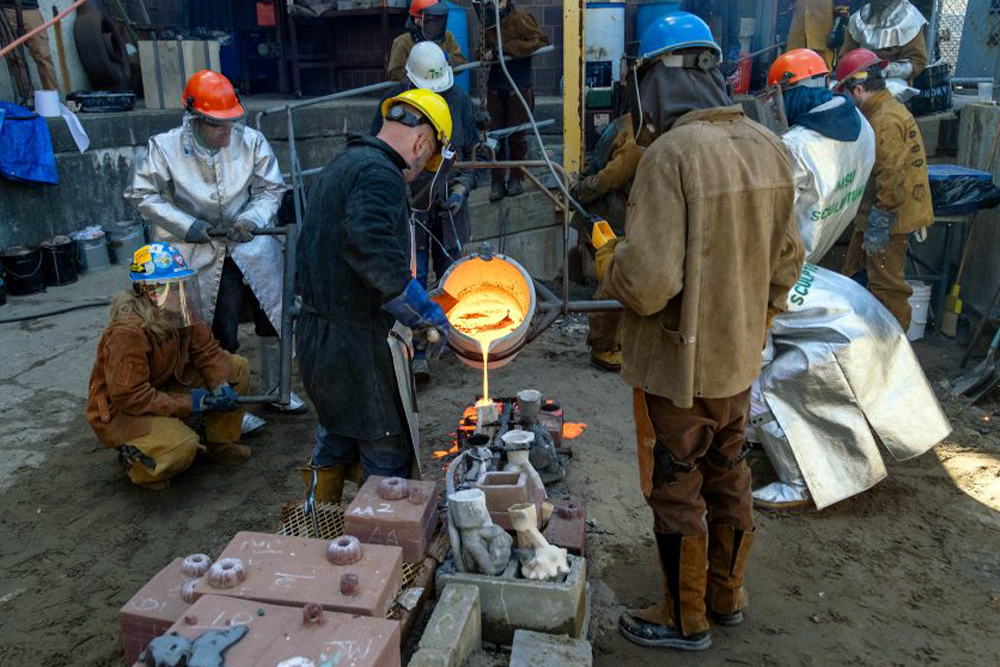

My vision is to build long-term partnerships that strengthen communities and local economies, create meaningful learning experiences for our students, and support our land-grant mission of serving the people of Michigan. A critical part of this work involves leveraging the unique strengths of our disciplines to improve lives, expand opportunity, and contribute to Michigan’s future success.
In the College of Arts and Letters, we start by listening to the needs and aspirations of our partners and then align our teaching, research, and creative activity to address those challenges through genuine collaboration. This approach is grounded in the empathy, reciprocity, and relationship-building that are central to the arts and humanities. Rather than viewing communities as recipients of university expertise, we see them as co-creators of knowledge and innovation.
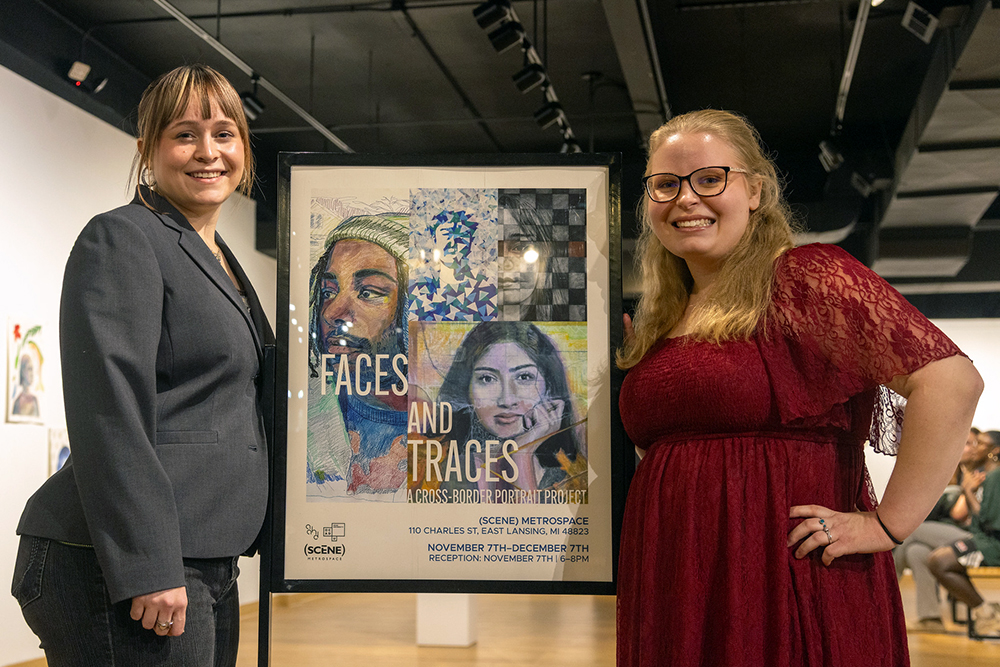
For the state of Michigan, the benefit in collaborating with us is a long-term partner committed to strengthening the creative economy, activating talent, and helping communities address complex challenges. By working together, we can enhance quality of life and build resilient, inclusive communities that drive economic growth across the state.
What are some of the opportunities you see to support initiatives across Michigan?
I see particularly exciting opportunities in healthcare, the creative economy, and community-engaged partnerships where our disciplines can make a lasting impact on the people and communities we serve.
Through growing collaborations with Henry Ford Health, we are exploring how ethics, empathy, arts-based programming, and language expertise can improve patient experiences and outcomes. We are collaborating with the City of Detroit to preserve cultural heritage while supporting emerging creative industries, including fashion. We’re also working closely with organizations such as the Refugee Development Center in Lansing and the Urban Renaissance Center in Flint through the Ubuntu Institute to support community-led priorities.


These partnerships demonstrate that arts, humanities, languages, and culture are essential partners in addressing society’s most pressing challenges. Our disciplines are uniquely positioned to contribute across virtually every sector by bringing ethical insight, cultural understanding, communication expertise, community engagement, critical thinking, and creativity to challenges that cannot be addressed through technical expertise alone.
How does an arts and humanities education at MSU uniquely prepare students for careers in Michigan and beyond?
An arts and humanities education at MSU equips students with the durable skills employers consistently value most: critical thinking, effective communication, ethical reasoning, creativity, problem-solving, and the ability to work across cultures and perspectives.

As careers continue to evolve, adaptability and lifelong learning have become essential. The arts and humanities prepare students not only to navigate a lifetime of change, but to do so with the cultural awareness, empathy, and an ethical foundation needed to lead in an increasingly interconnected world.
Our fields cultivate the whole person by nurturing curiosity, empathy, creativity, and reflection. They prepare students not only for successful careers, but also to become thoughtful, well-informed citizens who contribute to their communities, engage constructively across differences, and lead with integrity.


How do the arts, culture, and humanities enrich the lives of Spartans and Michiganders?
The arts, culture, and humanities enrich our lives by helping us better understand ourselves and others, appreciate different perspectives, and find meaning and common ground in an increasingly divided world. They foster a stronger sense of belonging, preserve the histories and traditions that shape communities, and help us to imagine what those communities can become.
They also help us engage constructively across differences and understand experiences beyond our own. Those contributions may not always appear on a balance sheet, but they are essential to a healthy civic culture, strong communities, and Michigan’s long-term vitality.
By Beth Bonsall
Media Contacts: Beth Bonsall, Alex Tekip